Real-time visibility into machines, utilities, and environmental systems across your facility.
Alarms. Dashboards. KPIs. OEE. Shift Reports.
From field sensors to executive dashboards — one platform.
Built for live industrial environments — configuration changes are applied instantly through the web interface without stopping the system or interrupting data collection.
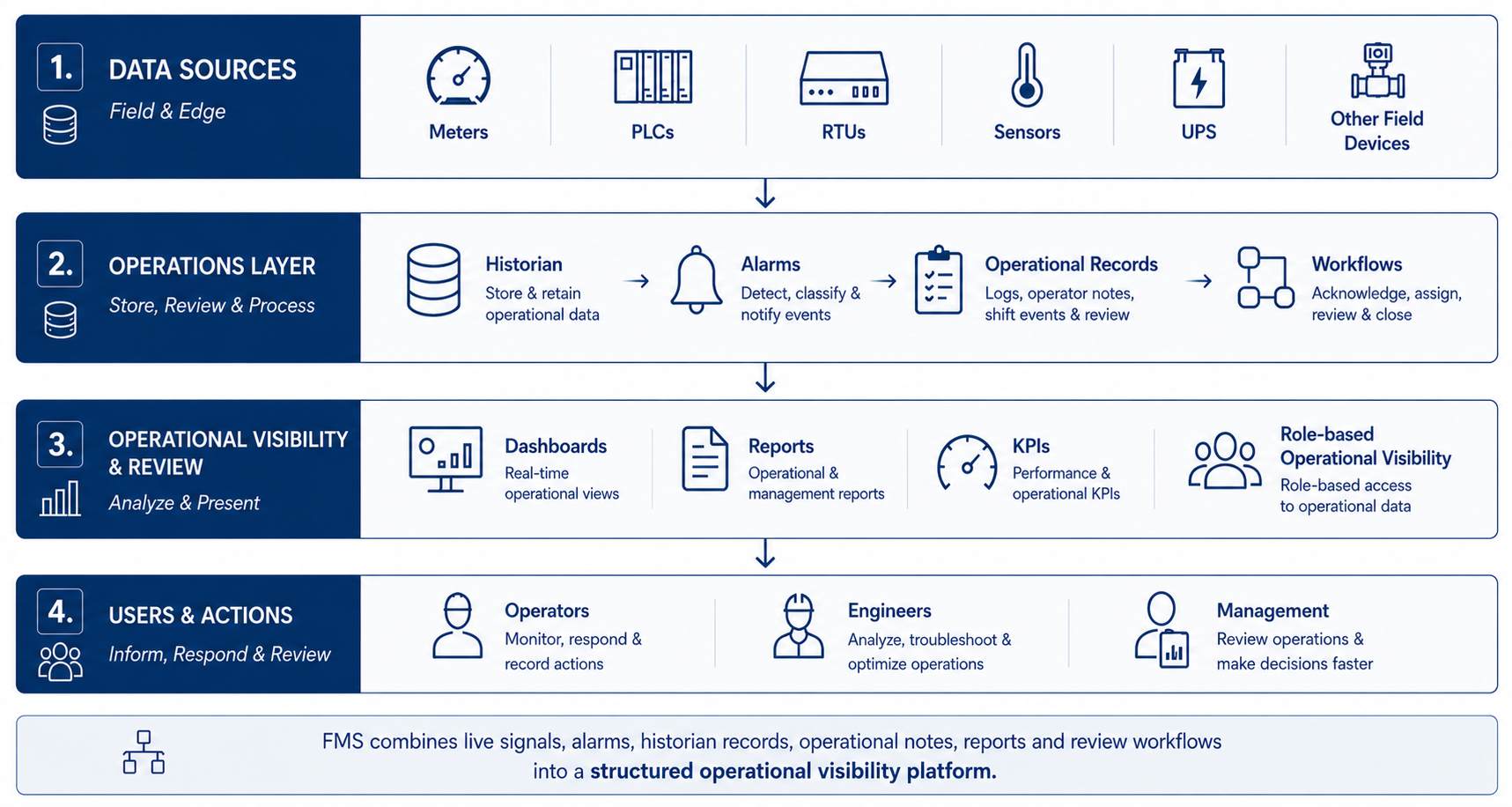
FMS connects to industrial equipment and facility systems through standard protocols — collecting, alarming, and reporting in real time.
Protocols: Modbus RTU/TCP • SNMP • MQTT • OPC-UA • BACnet • REST API • Digital I/O
From raw data to operational decisions — structured output for engineers and management.
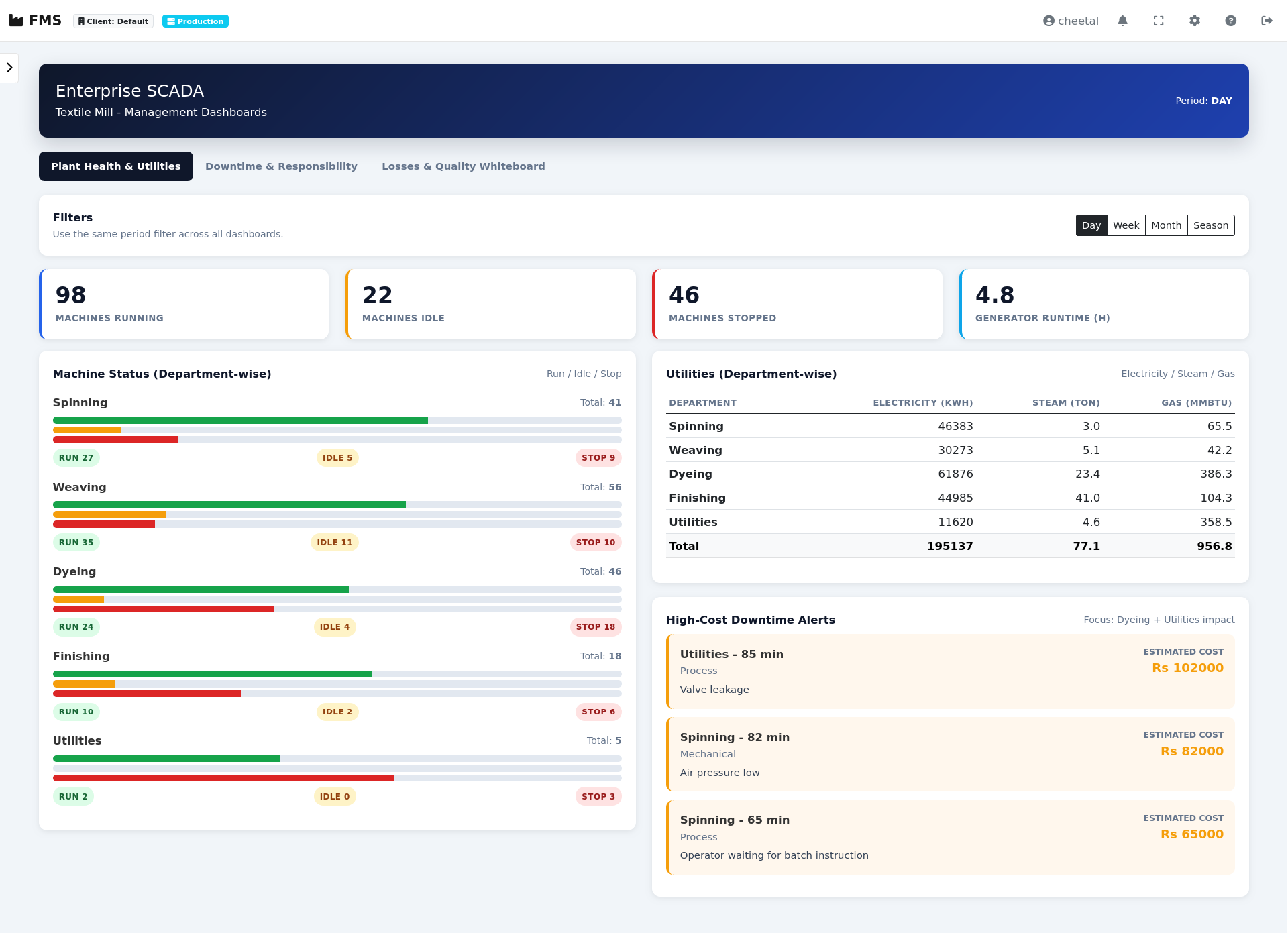
Per-tag alarm thresholds with SMS, email, and push notification. Live dashboards with mimic displays, gauges, and trend graphs. Drill from facility overview to individual sensor in seconds.
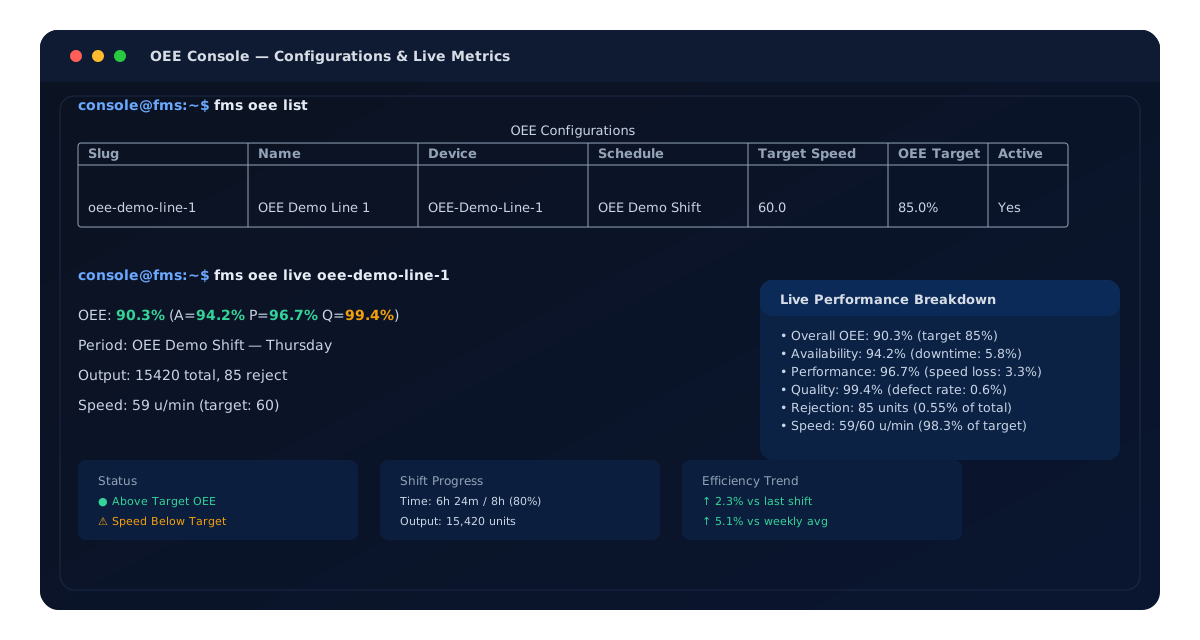
Shift-based reporting built in. Define your KPIs, map your schedules, and track downtime. OEE calculations feed directly from live data. Executive visibility without manual spreadsheets.
Automated shift reports, historical trend analysis, and energy consumption summaries. CSV export, scheduled reports, and audit-ready records for compliance.
Not just monitoring — a governed, versioned, AI-ready operations platform.
Ask questions about your plant in plain language. Get structured diagnostics, shift summaries, and KPI narratives — without writing reports manually. AI generates proposals for review; engineers approve before anything changes.
Every configuration change is tracked, versioned, and attributed. Compare any two versions instantly. Draft changes are reviewed before deployment. Nothing changes without a record. Built for pharma, manufacturing, and regulated environments.
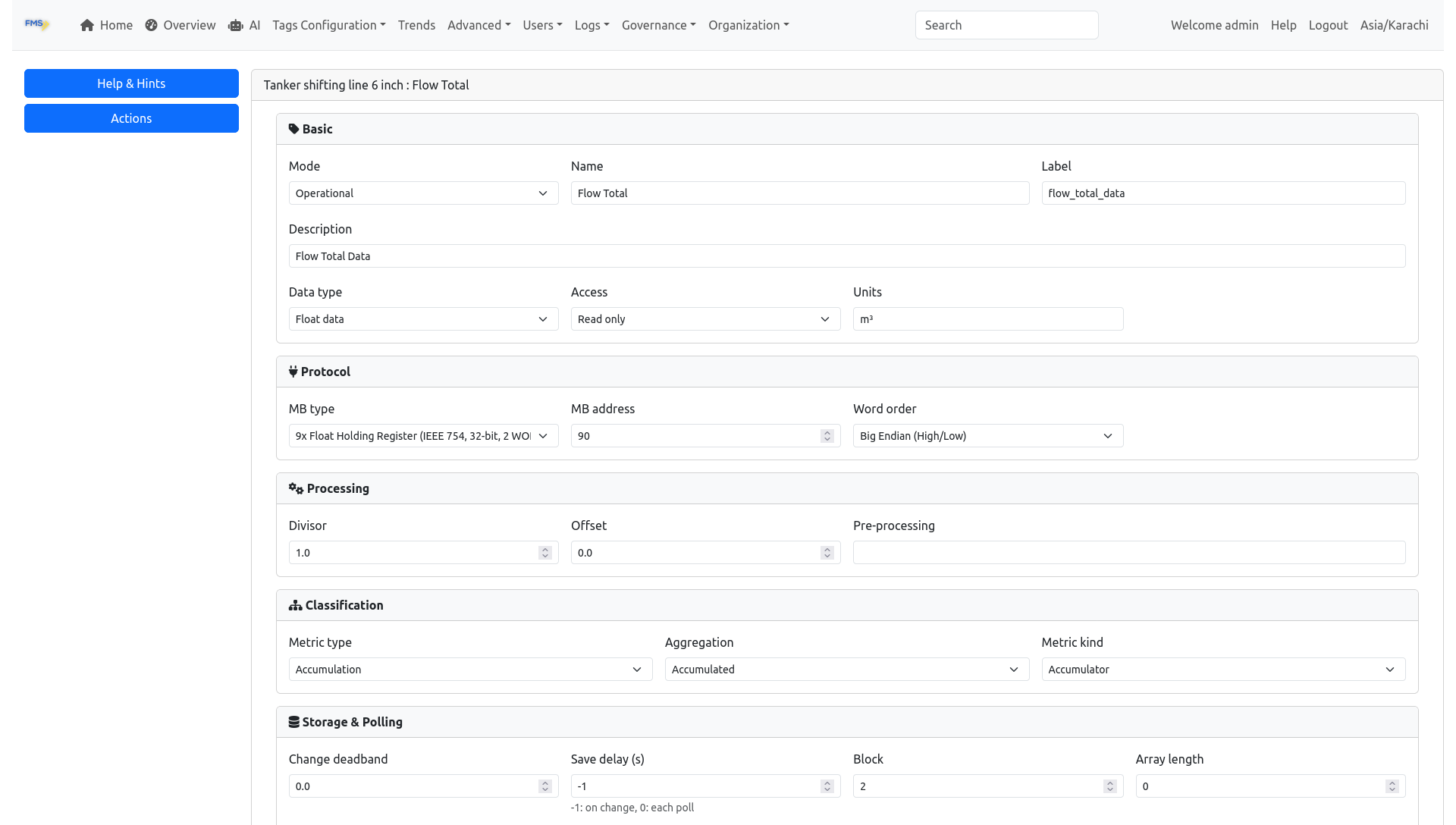
Engineers configure devices, alarms, dashboards, KPIs, OEE rules, and schedules directly through the web interface. Changes take effect immediately — no service restarts, no recompilation, no downtime.
Practical benefits across configuration, maintenance, and daily operations
Define devices, tags, templates, and alarms through a structured interface. No undocumented changes. Every setting is versioned. New engineers can understand the system from its history, not from memory.
Query system state, review alarm history, and compare configuration versions before making changes. Proposed changes are drafted and reviewed — not applied directly. Reduces risk of accidental misconfiguration.
Shift-based KPI reports generated automatically. OEE tracked against schedule. Managers get a clear picture of production performance without chasing data from multiple sources.
AI assists with diagnostics, summaries, and structured queries. It generates proposals that engineers review and approve. AI does not modify the system directly. Governance is always enforced.
All system configuration is done through the web interface. Engineers configure devices, alarms, dashboards, KPIs, OEE rules, and schedules using standard web forms — no special tools or training required.
Changes take effect immediately. There is no compilation step, no service restart, and no interruption to data collection. FMS is designed for continuous plant operation where downtime is unacceptable.
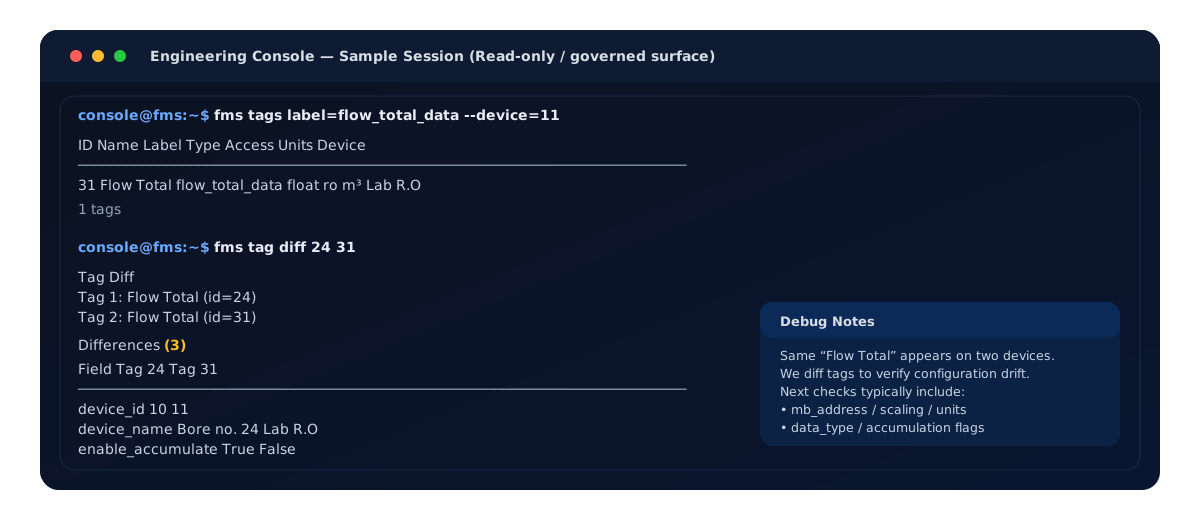
For experienced engineers who need faster workflows, FMS includes an optional Engineering Console. This is a complementary tool — it does not replace the web interface, but extends it for advanced diagnostics and automation.
Configuration comparison — reviewing changes before applying
OEE live metrics — shift performance at a glance
The Engineering Console is optional. All day-to-day configuration and monitoring is done through the standard web interface.
SCADA & Legacy Support: Our platform fully supports traditional SCADA applications including HMI, mimic displays, trend analysis, and alarm management.
Every script, template, and configuration change is versioned and diffable. You can see exactly what changed, when, and who approved it. No other local provider offers this.
Governance is built into the workflow, not bolted on. Changes go through a structured draft-and-approve cycle. Audit logs are automatic. No separate compliance tool needed.
AI assists with diagnostics and summaries. It proposes — engineers decide. No direct system mutation. Useful without being risky. Cost-controlled and scoped.
FMS Lite for smaller sites. FMS Enterprise for multi-site, governed deployments.